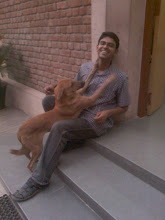
I have a daughter...
Sunday, January 18, 2015


Tuesday, February 12, 2013
The last entry I wrote was almost three years ago. I do not have a clear list of reasons of why I stopped. Somewhere along the line, I stopped feeling the need to document my life. I suppose a lot of people dropped blogging in favor of social networking sites (faster response, known audience, immediate gratification) but I went the other way. I also quit Facebook and Orkut. I have only one entry on twitter and the social networking site I check most frequently (ie once a month) is Linkedin.
It would be fashionable to say that I sacrificed my online avatar in favor of genuine meaningful relationships in the real world. That would also be an outright lie. All I can say is that my world has become narrower (work, immediate loved ones, lots of books, occasional travel) and I am comfortable keeping it that way. I do not know if that makes me a dinosaur or a prophet (or a nobody).
Of course Facebook beckons from time to time. Sometimes when my wife is checking her Facebook account (she is content to check Facebook once a week), I will sit next to her and hungrily devour updates from people I do and do not know. I will make her click videos, read inane quotes and pass unflattering remarks on personal photos. When she sharply reminds me to stop being a hypocrite and get my own Facebook account, I am tempted...but then I go no further.
A part of me remains firmly convinced that the more opportunities we have to express ourselves, the more noise we generate. A human being can have only so many meaningful things to say in his or her life time. We are not interesting beyond a point. We have no right to demand an audience. We have no obligation to be part of an audience.
It would be fashionable to say that I sacrificed my online avatar in favor of genuine meaningful relationships in the real world. That would also be an outright lie. All I can say is that my world has become narrower (work, immediate loved ones, lots of books, occasional travel) and I am comfortable keeping it that way. I do not know if that makes me a dinosaur or a prophet (or a nobody).
Of course Facebook beckons from time to time. Sometimes when my wife is checking her Facebook account (she is content to check Facebook once a week), I will sit next to her and hungrily devour updates from people I do and do not know. I will make her click videos, read inane quotes and pass unflattering remarks on personal photos. When she sharply reminds me to stop being a hypocrite and get my own Facebook account, I am tempted...but then I go no further.
A part of me remains firmly convinced that the more opportunities we have to express ourselves, the more noise we generate. A human being can have only so many meaningful things to say in his or her life time. We are not interesting beyond a point. We have no right to demand an audience. We have no obligation to be part of an audience.
Saturday, April 24, 2010
Monday, April 19, 2010
I've been guilty of not posting anything on my blog for close to a year...which is ghastly considering that its been a year filled with signicant moments : I bought my first car, fell in love and travelled abroad. I even managed to get married in the end.
While it gnaws my soul to no end that I failed to chronicle anything, I can only offer one feeble excuse: Work. Work that began by gently lapping against my toes before suddenly grabbing me by the calves and dragging me as I kicked and screamed my way into its murky depths.
Its taken the better part of a year for me to come to terms with a demanding role. I found it hard to write anything without this sinking feeling that I was wasting my time while something more important in the office needed my attention. I hated that my work took up so much of my time but I also got used to working on an endless adrenaline rush. Sitting down and writing something of significance didnt give me a high. Besides I was neck deep in an office romance :-). I had a lot on my mind.
Now that I'm hitched and also wiser at work, I'd like to think that my blog will see regular entries again. Wish me luck, there's a lot to catch up on.
While it gnaws my soul to no end that I failed to chronicle anything, I can only offer one feeble excuse: Work. Work that began by gently lapping against my toes before suddenly grabbing me by the calves and dragging me as I kicked and screamed my way into its murky depths.
Its taken the better part of a year for me to come to terms with a demanding role. I found it hard to write anything without this sinking feeling that I was wasting my time while something more important in the office needed my attention. I hated that my work took up so much of my time but I also got used to working on an endless adrenaline rush. Sitting down and writing something of significance didnt give me a high. Besides I was neck deep in an office romance :-). I had a lot on my mind.
Now that I'm hitched and also wiser at work, I'd like to think that my blog will see regular entries again. Wish me luck, there's a lot to catch up on.
Friday, May 22, 2009
Sunday, May 10, 2009
Sitting in my car listening to “Ek Lau Is Tarah Kyun Bhuji Mere Maula…” , watching the wipers idly clean my windshield as the rain drops trickled down, I felt shiver of delight. It’s funny how music makes everything seem so poignant, so surreal. The yellow haze around the streetlights, the pedestrians scurrying towards shelter, the dog curled under a broken down truck, people with umbrellas queuing outside the Andhra Dum Biriyani Center , the glum looking owner of the Iyengar Bakery..for a fleeting moment everything was beautiful. I was perfectly happy, perfectly satisfied with my life.
I wish my life had background music.
Saturday, May 02, 2009

Sunday, April 05, 2009
Before my sister and I went about cleaning out our house, I visualized myself writing a sentimental blog entry, an entry of remorse, of faded memories that came to life, of regret of a life that turned out different from what I’d imagined. We were after all going to rid the house of all the furniture, the vessels, the books, the photographs, the electronics, the clocks, the clothes, the curtains, the puja room pictures and the idols. We would spend two days getting rid of twenty years worth of possessions. At the end we would give it out for rent so that strangers could occupy the rooms we grew up in. We would trade our personal museum for convenience and cold hard cash.
The horrible truth is we did it with clinical efficiency. I spent most of my time standing on a stool, clad in a baniyan and a pair of shorts as I systematically pulled out box after box from the loft and passed them down to my sister after which we decided the their fate: Stuff to keep, Stuff for charity and Stuff to trash. We hardly spent time agonizing over individual items. I would take some vessels, some books, a small cupboard, a study table and a Godrej Bero. My sister would take a couple of cupboards and some books. My uncle would take the computer table and the fridge. Everything else would be given to charity. We surprised ourselves with our practicality.
While a sense of sadness did prevail, we all had terrible limitations. We lived far away in Bangalore. I shared a fully furnished flat with two other guys and I hardly had any space to spare. My sister and uncle had full houses as well. Where was the room to keep all the stuff?
“You should keep it all” my grandmother said. “It will be useful for you when you get married”. She was right but marriage seemed too distant a possibility to consider seriously now. I was in no mood to have so many possessions. It didn’t seem right for someone my age.
“I don’t want to be weighed down by a dining table.” I complained to my uncle,. “And all those vessels! I don’t even cook!” My uncle however didn’t appreciate the flippancy.
“Dinesh, you’ll have to remember that those items were bought by your parents when their income was very meager.” He said gently. “They didn’t just pick those items up because they fancied them. They worked hard, saved money gradually and bought them because they really needed them. It took them over two decades to acquire these items.” You can’t dismiss them just like that.”
I felt guilty, but I still didn’t want the dining table.
The horrible truth is we did it with clinical efficiency. I spent most of my time standing on a stool, clad in a baniyan and a pair of shorts as I systematically pulled out box after box from the loft and passed them down to my sister after which we decided the their fate: Stuff to keep, Stuff for charity and Stuff to trash. We hardly spent time agonizing over individual items. I would take some vessels, some books, a small cupboard, a study table and a Godrej Bero. My sister would take a couple of cupboards and some books. My uncle would take the computer table and the fridge. Everything else would be given to charity. We surprised ourselves with our practicality.
While a sense of sadness did prevail, we all had terrible limitations. We lived far away in Bangalore. I shared a fully furnished flat with two other guys and I hardly had any space to spare. My sister and uncle had full houses as well. Where was the room to keep all the stuff?
“You should keep it all” my grandmother said. “It will be useful for you when you get married”. She was right but marriage seemed too distant a possibility to consider seriously now. I was in no mood to have so many possessions. It didn’t seem right for someone my age.
“I don’t want to be weighed down by a dining table.” I complained to my uncle,. “And all those vessels! I don’t even cook!” My uncle however didn’t appreciate the flippancy.
“Dinesh, you’ll have to remember that those items were bought by your parents when their income was very meager.” He said gently. “They didn’t just pick those items up because they fancied them. They worked hard, saved money gradually and bought them because they really needed them. It took them over two decades to acquire these items.” You can’t dismiss them just like that.”
I felt guilty, but I still didn’t want the dining table.
Friday, January 02, 2009
I knew I’d made a mistake by turning up at office on the 2’nd. Given that it was the Friday following New Years Eve, I only encountered lonely chairs and empty cubicles. In a way, the sight was a relief. While I’d often had doubts about my career choice after I joined an IT firm, I remembered this was why I opted for IT in the first place. If Thursday or a Tuesday was a holiday, you could be sure that the weekend would last 4 days.
Weekends off, air conditioning, opportunities to travel abroad and the chance to stay in Bangalore…these were the reasons I chose an IT firm. The thought of an exciting and challenging career had never crossed my mind. My more adventurous friends who’d joined faster paced industries like Telecom and FMCG were spending New Year by themselves in obscure villages and small towns, deep in the heart of rural India. No doubt that they would emerge stronger from the experience but for now I gloated over the fact that I could go home now and no one would care. (On the other hand, there was a good chance I could get laid off due to the recession but I didn’t let the thought trouble me too much)
I hung around for a while, completing some trivial tasks and then I left. It was only 12:30 PM and I was on my way out. The sun was shining quite brightly, a bit of a relief considering it was quite chilly in Bangalore. I’d arranged to meet my sister and brother in law for lunch at an Italian restaurant called Herbs and Spices at Indira Nagar.
Herbs and Spices turned out to be quite a spiffy restaurant. The menu had some very fancy sounding Italian items, none of which I understood so I randomly made my choice. My brother in law safely went in for a Pizza while my sister who felt the need for something sophisticated went in for ravioli with artichokes and goat cheese. Having ordered our food, we sat back and relaxed.
Our food arrived. My quiche was quite nice to eat, even though I didn’t know what it was. The pizza though bland was quite a wise choice. My sister took a forkful of her ravioli with goat cheese and artichoke and then her eyes went glassy. She didn’t say anything for a few seconds and then she shuddered.
Out of concern, I took a sample of the ravioli and chewed it. Suddenly, I couldn’t breathe. The goat cheese overwhelmingly pungent, it made me quite dizzy. The artichokes tasted alien in my mouth and just as I made a masterful effort to keep the food down my throat, I saw his buttocks.
A group of foreigners were having lunch at the table opposite us and for some reason the man with his back to me had half his bottom hanging out of his pants. While I understood the need to make a fashion statement, the sight of his pale pimpled buttocks didn’t go well with the goat cheese. The fact that he was overweight and shapeless greatly increased my discomfort. Struggling for breath, I quickly sat back and averted my eyes. That’s when I realized my family was the only one restaurant not wearing low waist jeans. Everyone’s chaddi was display.
What had happened? I knew low waist jeans were a trend but why was I being subject to the sight of everyone’s underwear against my will? I caught my breath. The girl to my right was wearing a thong.
I looked around again, spying only rows of Calvin Klein and Tommy Hilfiger. I searched in vain for a Rupa frontline or a VIP but none were forthcoming. The middle class did not dare to bare.
It was depressing. For a few moments I had felt very classy that I was eating Italian food at a posh restaurant. The next moment I realized that I didn’t belong there. Not because I couldn’t afford the food, but simply because my underwear brand was for my own eyes only. My middle class morals would never let me feel comfortable there.
Once upon a time, eating out was special, a luxury reserved only for special occasions. A trip to Saravana Bhavan to eat its special Sambhar Vadai was the highlight of a month or even a year. My family would brave waiting in a crushing crowd in order to get a seat. It was a team effort. We would scan the tables, alert to note which family was likely to finish their meal first and then push our way towards that table, breathing down their necks until they got up. For the next hour or so, we would ourselves endure the impatient looks of the other patrons as we busily attacked our food. The sight of a waiter holding a plate of paper Masala dosa aloft his head as he navigated the crowd to reach our table would almost cause me to burst from excitement.
Sitting at Herbs and Spices, with the nauseating smell of goat cheese in the air and only Calvin Klein and Tommy Hilfiger for company, I missed my childhood.
Weekends off, air conditioning, opportunities to travel abroad and the chance to stay in Bangalore…these were the reasons I chose an IT firm. The thought of an exciting and challenging career had never crossed my mind. My more adventurous friends who’d joined faster paced industries like Telecom and FMCG were spending New Year by themselves in obscure villages and small towns, deep in the heart of rural India. No doubt that they would emerge stronger from the experience but for now I gloated over the fact that I could go home now and no one would care. (On the other hand, there was a good chance I could get laid off due to the recession but I didn’t let the thought trouble me too much)
I hung around for a while, completing some trivial tasks and then I left. It was only 12:30 PM and I was on my way out. The sun was shining quite brightly, a bit of a relief considering it was quite chilly in Bangalore. I’d arranged to meet my sister and brother in law for lunch at an Italian restaurant called Herbs and Spices at Indira Nagar.
Herbs and Spices turned out to be quite a spiffy restaurant. The menu had some very fancy sounding Italian items, none of which I understood so I randomly made my choice. My brother in law safely went in for a Pizza while my sister who felt the need for something sophisticated went in for ravioli with artichokes and goat cheese. Having ordered our food, we sat back and relaxed.
Our food arrived. My quiche was quite nice to eat, even though I didn’t know what it was. The pizza though bland was quite a wise choice. My sister took a forkful of her ravioli with goat cheese and artichoke and then her eyes went glassy. She didn’t say anything for a few seconds and then she shuddered.
Out of concern, I took a sample of the ravioli and chewed it. Suddenly, I couldn’t breathe. The goat cheese overwhelmingly pungent, it made me quite dizzy. The artichokes tasted alien in my mouth and just as I made a masterful effort to keep the food down my throat, I saw his buttocks.
A group of foreigners were having lunch at the table opposite us and for some reason the man with his back to me had half his bottom hanging out of his pants. While I understood the need to make a fashion statement, the sight of his pale pimpled buttocks didn’t go well with the goat cheese. The fact that he was overweight and shapeless greatly increased my discomfort. Struggling for breath, I quickly sat back and averted my eyes. That’s when I realized my family was the only one restaurant not wearing low waist jeans. Everyone’s chaddi was display.
What had happened? I knew low waist jeans were a trend but why was I being subject to the sight of everyone’s underwear against my will? I caught my breath. The girl to my right was wearing a thong.
I looked around again, spying only rows of Calvin Klein and Tommy Hilfiger. I searched in vain for a Rupa frontline or a VIP but none were forthcoming. The middle class did not dare to bare.
It was depressing. For a few moments I had felt very classy that I was eating Italian food at a posh restaurant. The next moment I realized that I didn’t belong there. Not because I couldn’t afford the food, but simply because my underwear brand was for my own eyes only. My middle class morals would never let me feel comfortable there.
Once upon a time, eating out was special, a luxury reserved only for special occasions. A trip to Saravana Bhavan to eat its special Sambhar Vadai was the highlight of a month or even a year. My family would brave waiting in a crushing crowd in order to get a seat. It was a team effort. We would scan the tables, alert to note which family was likely to finish their meal first and then push our way towards that table, breathing down their necks until they got up. For the next hour or so, we would ourselves endure the impatient looks of the other patrons as we busily attacked our food. The sight of a waiter holding a plate of paper Masala dosa aloft his head as he navigated the crowd to reach our table would almost cause me to burst from excitement.
Sitting at Herbs and Spices, with the nauseating smell of goat cheese in the air and only Calvin Klein and Tommy Hilfiger for company, I missed my childhood.
Sunday, December 14, 2008
I'm facing something of a mental block when it comes to writing something original. I think a lot of it has to do with the crazy long hours at work but I'm hoping it will clear soon. (Scary thought, am I a writer pretending to be an MBA? Or an MBA pretending to be a writer? Or do I suck equally at both?)
Here's a speech by Bill Watterson that I love:
OME THOUGHTS ON THE REAL WORLD BY ONE WHO GLIMPSED IT AND FLED
Bill Watterson
Kenyon College Commencement
May 20, 1990
I have a recurring dream about Kenyon. In it, I'm walking to the post office on the way to my first class at the start of the school year. Suddenly it occurs to me that I don't have my schedule memorized, and I'm not sure which classes I'm taking, or where exactly I'm supposed to be going.
As I walk up the steps to the postoffice, I realize I don't have my box key, and in fact, I can't remember what my box number is. I'm certain that everyone I know has written me a letter, but I can't get them. I get more flustered and annoyed by the minute. I head back to Middle Path, racking my brains and asking myself, "How many more years until I graduate? ...Wait, didn't I graduate already?? How old AM I?" Then I wake up.
Experience is food for the brain. And four years at Kenyon is a rich meal. I suppose it should be no surprise that your brains will probably burp up Kenyon for a long time. And I think the reason I keep having the dream is because its central image is a metaphor for a good part of life: that is, not knowing where you're going or what you're doing.
I graduated exactly ten years ago. That doesn't give me a great deal of experience to speak from, but I'm emboldened by the fact that I can't remember a bit of MY commencement, and I trust that in half an hour, you won't remember of yours either.
In the middle of my sophomore year at Kenyon, I decided to paint a copy of Michelangelo's "Creation of Adam" from the Sistine Chapel on the ceiling of my dorm room. By standing on a chair, I could reach the ceiling, and I taped off a section, made a grid, and started to copy the picture from my art history book.
Working with your arm over your head is hard work, so a few of my more ingenious friends rigged up a scaffold for me by stacking two chairs on my bed, and laying the table from the hall lounge across the chairs and over to the top of my closet. By climbing up onto my bed and up the chairs, I could hoist myself onto the table, and lie in relative comfort two feet under my painting. My roommate would then hand up my paints, and I could work for several hours at a stretch.
The picture took me months to do, and in fact, I didn't finish the work until very near the end of the school year. I wasn't much of a painter then, but what the work lacked in color sense and technical flourish, it gained in the incongruity of having a High Renaissance masterpiece in a college dorm that had the unmistakable odor of old beer cans and older laundry.
The painting lent an air of cosmic grandeur to my room, and it seemed to put life into a larger perspective. Those boring, flowery English poets didn't seem quite so important, when right above my head God was transmitting the spark of life to man.
My friends and I liked the finished painting so much in fact, that we decided I should ask permission to do it. As you might expect, the housing director was curious to know why I wanted to paint this elaborate picture on my ceiling a few weeks before school let out. Well, you don't get to be a sophomore at Kenyon without learning how to fabricate ideas you never had, but I guess it was obvious that my idea was being proposed retroactively. It ended up that I was allowed to paint the picture, so long as I painted over it and returned the ceiling to normal at the end of the year. And that's what I did.
Despite the futility of the whole episode, my fondest memories of college are times like these, where things were done out of some inexplicable inner imperative, rather than because the work was demanded. Clearly, I never spent as much time or work on any authorized art project, or any poli sci paper, as I spent on this one act of vandalism.
It's surprising how hard we'll work when the work is done just for ourselves. And with all due respect to John Stuart Mill, maybe utilitarianism is overrated. If I've learned one thing from being a cartoonist, it's how important playing is to creativity and happiness. My job is essentially to come up with 365 ideas a year.
If you ever want to find out just how uninteresting you really are, get a job where the quality and frequency of your thoughts determine your livelihood. I've found that the only way I can keep writing every day, year after year, is to let my mind wander into new territories. To do that, I've had to cultivate a kind of mental playfulness.
We're not really taught how to recreate constructively. We need to do more than find diversions; we need to restore and expand ourselves. Our idea of relaxing is all too often to plop down in front of the television set and let its pandering idiocy liquefy our brains. Shutting off the thought process is not rejuvenating; the mind is like a car battery-it recharges by running.
You may be surprised to find how quickly daily routine and the demands of "just getting by: absorb your waking hours. You may be surprised to find how quickly you start to see your politics and religion become matters of habit rather than thought and inquiry. You may be surprised to find how quickly you start to see your life in terms of other people's expectations rather than issues. You may be surprised to find out how quickly reading a good book sounds like a luxury.
At school, new ideas are thrust at you every day. Out in the world, you'll have to find the inner motivation to search for new ideas on your own. With any luck at all, you'll never need to take an idea and squeeze a punchline out of it, but as bright, creative people, you'll be called upon to generate ideas and solutions all your lives. Letting your mind play is the best way to solve problems.
For me, it's been liberating to put myself in the mind of a fictitious six year-old each day, and rediscover my own curiosity. I've been amazed at how one ideas leads to others if I allow my mind to play and wander. I know a lot about dinosaurs now, and the information has helped me out of quite a few deadlines.
A playful mind is inquisitive, and learning is fun. If you indulge your natural curiosity and retain a sense of fun in new experience, I think you'll find it functions as a sort of shock absorber for the bumpy road ahead.
So, what's it like in the real world? Well, the food is better, but beyond that, I don't recommend it.
I don't look back on my first few years out of school with much affection, and if I could have talked to you six months ago, I'd have encouraged you all to flunk some classes and postpone this moment as long as possible. But now it's too late.
Unfortunately, that was all the advice I really had. When I was sitting where you are, I was one of the lucky few who had a cushy job waiting for me. I'd drawn political cartoons for the Collegian for four years, and the Cincinnati Post had hired me as an editorial cartoonist. All my friends were either dreading the infamous first year of law school, or despondent about their chances of convincing anyone that a history degree had any real application outside of academia.
Boy, was I smug.
As it turned out, my editor instantly regretted his decision to hire me. By the end of the summer, I'd been given notice; by the beginning of winter, I was in an unemployment line; and by the end of my first year away from Kenyon, I was broke and living with my parents again. You can imagine how upset my dad was when he learned that Kenyon doesn't give refunds.
Watching my career explode on the lauchpad caused some soul searching. I eventually admitted that I didn't have what it takes to be a good political cartoonist, that is, an interest in politics, and I returned to my firs love, comic strips.
For years I got nothing but rejection letters, and I was forced to accept a real job.
A REAL job is a job you hate. I designed car ads and grocery ads in the windowless basement of a convenience store, and I hated every single minute of the 4-1/2 million minutes I worked there. My fellow prisoners at work were basically concerned about how to punch the time clock at the perfect second where they would earn another 20 cents without doing any work for it.
It was incredible: after every break, the entire staff would stand around in the garage where the time clock was, and wait for that last click. And after my used car needed the head gasket replaced twice, I waited in the garage too.
It's funny how at Kenyon, you take for granted that the people around you think about more than the last episode of Dynasty. I guess that's what it means to be in an ivory tower.
Anyway, after a few months at this job, I was starved for some life of the mind that, during my lunch break, I used to read those poli sci books that I'd somehow never quite finished when I was here. Some of those books were actually kind of interesting. It was a rude shock to see just how empty and robotic life can be when you don't care about what you're doing, and the only reason you're there is to pay the bills.
Thoreau said,
"the mass of men lead lives of quiet desperation."
That's one of those dumb cocktail quotations that will strike fear in your heart as you get older. Actually, I was leading a life of loud desperation.
When it seemed I would be writing about "Midnite Madness Sale-abrations" for the rest of my life, a friend used to console me that cream always rises to the top. I used to think, so do people who throw themselves into the sea.
I tell you all this because it's worth recognizing that there is no such thing as an overnight success. You will do well to cultivate the resources in yourself that bring you happiness outside of success or failure. The truth is, most of us discover where we are headed when we arrive. At that time, we turn around and say, yes, this is obviously where I was going all along. It's a good idea to try to enjoy the scenery on the detours, because you'll probably take a few.
I still haven't drawn the strip as long as it took me to get the job. To endure five years of rejection to get a job requires either a faith in oneself that borders on delusion, or a love of the work. I loved the work.
Drawing comic strips for five years without pay drove home the point that the fun of cartooning wasn't in the money; it was in the work. This turned out to be an important realization when my break finally came.
Like many people, I found that what I was chasing wasn't what I caught. I've wanted to be a cartoonist since I was old enough to read cartoons, and I never really thought about cartoons as being a business. It never occurred to me that a comic strip I created would be at the mercy of a bloodsucking corporate parasite called a syndicate, and that I'd be faced with countless ethical decisions masquerading as simple business decisions.
To make a business decision, you don't need much philosophy; all you need is greed, and maybe a little knowledge of how the game works.
As my comic strip became popular, the pressure to capitalize on that popularity increased to the point where I was spending almost as much time screaming at executives as drawing. Cartoon merchandising is a $12 billion dollar a year industry and the syndicate understandably wanted a piece of that pie. But the more I though about what they wanted to do with my creation, the more inconsistent it seemed with the reasons I draw cartoons.
Selling out is usually more a matter of buying in. Sell out, and you're really buying into someone else's system of values, rules and rewards.
The so-called "opportunity" I faced would have meant giving up my individual voice for that of a money-grubbing corporation. It would have meant my purpose in writing was to sell things, not say things. My pride in craft would be sacrificed to the efficiency of mass production and the work of assistants. Authorship would become committee decision. Creativity would become work for pay. Art would turn into commerce. In short, money was supposed to supply all the meaning I'd need.
What the syndicate wanted to do, in other words, was turn my comic strip into everything calculated, empty and robotic that I hated about my old job. They would turn my characters into television hucksters and T-shirt sloganeers and deprive me of characters that actually expressed my own thoughts.
On those terms, I found the offer easy to refuse. Unfortunately, the syndicate also found my refusal easy to refuse, and we've been fighting for over three years now. Such is American business, I guess, where the desire for obscene profit mutes any discussion of conscience.
You will find your own ethical dilemmas in all parts of your lives, both personal and professional. We all have different desires and needs, but if we don't discover what we want from ourselves and what we stand for, we will live passively and unfulfilled. Sooner or later, we are all asked to compromise ourselves and the things we care about. We define ourselves by our actions. With each decision, we tell ourselves and the world who we are. Think about what you want out of this life, and recognize that there are many kinds of success.
Many of you will be going on to law school, business school, medical school, or other graduate work, and you can expect the kind of starting salary that, with luck, will allow you to pay off your own tuition debts within your own lifetime.
But having an enviable career is one thing, and being a happy person is another.
Creating a life that reflects your values and satisfies your soul is a rare achievement. In a culture that relentlessly promotes avarice and excess as the good life, a person happy doing his own work is usually considered an eccentric, if not a subversive. Ambition is only understood if it's to rise to the top of some imaginary ladder of success. Someone who takes an undemanding job because it affords him the time to pursue other interests and activities is considered a flake. A person who abandons a career in order to stay home and raise children is considered not to be living up to his potential-as if a job title and salary are the sole measure of human worth.
You'll be told in a hundred ways, some subtle and some not, to keep climbing, and never be satisfied with where you are, who you are, and what you're doing. There are a million ways to sell yourself out, and I guarantee you'll hear about them.
To invent your own life's meaning is not easy, but it's still allowed, and I think you'll be happier for the trouble.
Reading those turgid philosophers here in these remote stone buildings may not get you a job, but if those books have forced you to ask yourself questions about what makes life truthful, purposeful, meaningful, and redeeming, you have the Swiss Army Knife of mental tools, and it's going to come in handy all the time.
I think you'll find that Kenyon touched a deep part of you. These have been formative years. Chances are, at least of your roommates has taught you everything ugly about human nature you ever wanted to know.
With luck, you've also had a class that transmitted a spark of insight or interest you'd never had before. Cultivate that interest, and you may find a deeper meaning in your life that feeds your soul and spirit. Your preparation for the real world is not in the answers you've learned, but in the questions you've learned how to ask yourself.
Graduating from Kenyon, I suspect you'll find yourselves quite well prepared indeed.
I wish you all fulfillment and happiness. Congratulations on your achievement.
Bill Watterson
Here's a speech by Bill Watterson that I love:
OME THOUGHTS ON THE REAL WORLD BY ONE WHO GLIMPSED IT AND FLED
Bill Watterson
Kenyon College Commencement
May 20, 1990
I have a recurring dream about Kenyon. In it, I'm walking to the post office on the way to my first class at the start of the school year. Suddenly it occurs to me that I don't have my schedule memorized, and I'm not sure which classes I'm taking, or where exactly I'm supposed to be going.
As I walk up the steps to the postoffice, I realize I don't have my box key, and in fact, I can't remember what my box number is. I'm certain that everyone I know has written me a letter, but I can't get them. I get more flustered and annoyed by the minute. I head back to Middle Path, racking my brains and asking myself, "How many more years until I graduate? ...Wait, didn't I graduate already?? How old AM I?" Then I wake up.
Experience is food for the brain. And four years at Kenyon is a rich meal. I suppose it should be no surprise that your brains will probably burp up Kenyon for a long time. And I think the reason I keep having the dream is because its central image is a metaphor for a good part of life: that is, not knowing where you're going or what you're doing.
I graduated exactly ten years ago. That doesn't give me a great deal of experience to speak from, but I'm emboldened by the fact that I can't remember a bit of MY commencement, and I trust that in half an hour, you won't remember of yours either.
In the middle of my sophomore year at Kenyon, I decided to paint a copy of Michelangelo's "Creation of Adam" from the Sistine Chapel on the ceiling of my dorm room. By standing on a chair, I could reach the ceiling, and I taped off a section, made a grid, and started to copy the picture from my art history book.
Working with your arm over your head is hard work, so a few of my more ingenious friends rigged up a scaffold for me by stacking two chairs on my bed, and laying the table from the hall lounge across the chairs and over to the top of my closet. By climbing up onto my bed and up the chairs, I could hoist myself onto the table, and lie in relative comfort two feet under my painting. My roommate would then hand up my paints, and I could work for several hours at a stretch.
The picture took me months to do, and in fact, I didn't finish the work until very near the end of the school year. I wasn't much of a painter then, but what the work lacked in color sense and technical flourish, it gained in the incongruity of having a High Renaissance masterpiece in a college dorm that had the unmistakable odor of old beer cans and older laundry.
The painting lent an air of cosmic grandeur to my room, and it seemed to put life into a larger perspective. Those boring, flowery English poets didn't seem quite so important, when right above my head God was transmitting the spark of life to man.
My friends and I liked the finished painting so much in fact, that we decided I should ask permission to do it. As you might expect, the housing director was curious to know why I wanted to paint this elaborate picture on my ceiling a few weeks before school let out. Well, you don't get to be a sophomore at Kenyon without learning how to fabricate ideas you never had, but I guess it was obvious that my idea was being proposed retroactively. It ended up that I was allowed to paint the picture, so long as I painted over it and returned the ceiling to normal at the end of the year. And that's what I did.
Despite the futility of the whole episode, my fondest memories of college are times like these, where things were done out of some inexplicable inner imperative, rather than because the work was demanded. Clearly, I never spent as much time or work on any authorized art project, or any poli sci paper, as I spent on this one act of vandalism.
It's surprising how hard we'll work when the work is done just for ourselves. And with all due respect to John Stuart Mill, maybe utilitarianism is overrated. If I've learned one thing from being a cartoonist, it's how important playing is to creativity and happiness. My job is essentially to come up with 365 ideas a year.
If you ever want to find out just how uninteresting you really are, get a job where the quality and frequency of your thoughts determine your livelihood. I've found that the only way I can keep writing every day, year after year, is to let my mind wander into new territories. To do that, I've had to cultivate a kind of mental playfulness.
We're not really taught how to recreate constructively. We need to do more than find diversions; we need to restore and expand ourselves. Our idea of relaxing is all too often to plop down in front of the television set and let its pandering idiocy liquefy our brains. Shutting off the thought process is not rejuvenating; the mind is like a car battery-it recharges by running.
You may be surprised to find how quickly daily routine and the demands of "just getting by: absorb your waking hours. You may be surprised to find how quickly you start to see your politics and religion become matters of habit rather than thought and inquiry. You may be surprised to find how quickly you start to see your life in terms of other people's expectations rather than issues. You may be surprised to find out how quickly reading a good book sounds like a luxury.
At school, new ideas are thrust at you every day. Out in the world, you'll have to find the inner motivation to search for new ideas on your own. With any luck at all, you'll never need to take an idea and squeeze a punchline out of it, but as bright, creative people, you'll be called upon to generate ideas and solutions all your lives. Letting your mind play is the best way to solve problems.
For me, it's been liberating to put myself in the mind of a fictitious six year-old each day, and rediscover my own curiosity. I've been amazed at how one ideas leads to others if I allow my mind to play and wander. I know a lot about dinosaurs now, and the information has helped me out of quite a few deadlines.
A playful mind is inquisitive, and learning is fun. If you indulge your natural curiosity and retain a sense of fun in new experience, I think you'll find it functions as a sort of shock absorber for the bumpy road ahead.
So, what's it like in the real world? Well, the food is better, but beyond that, I don't recommend it.
I don't look back on my first few years out of school with much affection, and if I could have talked to you six months ago, I'd have encouraged you all to flunk some classes and postpone this moment as long as possible. But now it's too late.
Unfortunately, that was all the advice I really had. When I was sitting where you are, I was one of the lucky few who had a cushy job waiting for me. I'd drawn political cartoons for the Collegian for four years, and the Cincinnati Post had hired me as an editorial cartoonist. All my friends were either dreading the infamous first year of law school, or despondent about their chances of convincing anyone that a history degree had any real application outside of academia.
Boy, was I smug.
As it turned out, my editor instantly regretted his decision to hire me. By the end of the summer, I'd been given notice; by the beginning of winter, I was in an unemployment line; and by the end of my first year away from Kenyon, I was broke and living with my parents again. You can imagine how upset my dad was when he learned that Kenyon doesn't give refunds.
Watching my career explode on the lauchpad caused some soul searching. I eventually admitted that I didn't have what it takes to be a good political cartoonist, that is, an interest in politics, and I returned to my firs love, comic strips.
For years I got nothing but rejection letters, and I was forced to accept a real job.
A REAL job is a job you hate. I designed car ads and grocery ads in the windowless basement of a convenience store, and I hated every single minute of the 4-1/2 million minutes I worked there. My fellow prisoners at work were basically concerned about how to punch the time clock at the perfect second where they would earn another 20 cents without doing any work for it.
It was incredible: after every break, the entire staff would stand around in the garage where the time clock was, and wait for that last click. And after my used car needed the head gasket replaced twice, I waited in the garage too.
It's funny how at Kenyon, you take for granted that the people around you think about more than the last episode of Dynasty. I guess that's what it means to be in an ivory tower.
Anyway, after a few months at this job, I was starved for some life of the mind that, during my lunch break, I used to read those poli sci books that I'd somehow never quite finished when I was here. Some of those books were actually kind of interesting. It was a rude shock to see just how empty and robotic life can be when you don't care about what you're doing, and the only reason you're there is to pay the bills.
Thoreau said,
"the mass of men lead lives of quiet desperation."
That's one of those dumb cocktail quotations that will strike fear in your heart as you get older. Actually, I was leading a life of loud desperation.
When it seemed I would be writing about "Midnite Madness Sale-abrations" for the rest of my life, a friend used to console me that cream always rises to the top. I used to think, so do people who throw themselves into the sea.
I tell you all this because it's worth recognizing that there is no such thing as an overnight success. You will do well to cultivate the resources in yourself that bring you happiness outside of success or failure. The truth is, most of us discover where we are headed when we arrive. At that time, we turn around and say, yes, this is obviously where I was going all along. It's a good idea to try to enjoy the scenery on the detours, because you'll probably take a few.
I still haven't drawn the strip as long as it took me to get the job. To endure five years of rejection to get a job requires either a faith in oneself that borders on delusion, or a love of the work. I loved the work.
Drawing comic strips for five years without pay drove home the point that the fun of cartooning wasn't in the money; it was in the work. This turned out to be an important realization when my break finally came.
Like many people, I found that what I was chasing wasn't what I caught. I've wanted to be a cartoonist since I was old enough to read cartoons, and I never really thought about cartoons as being a business. It never occurred to me that a comic strip I created would be at the mercy of a bloodsucking corporate parasite called a syndicate, and that I'd be faced with countless ethical decisions masquerading as simple business decisions.
To make a business decision, you don't need much philosophy; all you need is greed, and maybe a little knowledge of how the game works.
As my comic strip became popular, the pressure to capitalize on that popularity increased to the point where I was spending almost as much time screaming at executives as drawing. Cartoon merchandising is a $12 billion dollar a year industry and the syndicate understandably wanted a piece of that pie. But the more I though about what they wanted to do with my creation, the more inconsistent it seemed with the reasons I draw cartoons.
Selling out is usually more a matter of buying in. Sell out, and you're really buying into someone else's system of values, rules and rewards.
The so-called "opportunity" I faced would have meant giving up my individual voice for that of a money-grubbing corporation. It would have meant my purpose in writing was to sell things, not say things. My pride in craft would be sacrificed to the efficiency of mass production and the work of assistants. Authorship would become committee decision. Creativity would become work for pay. Art would turn into commerce. In short, money was supposed to supply all the meaning I'd need.
What the syndicate wanted to do, in other words, was turn my comic strip into everything calculated, empty and robotic that I hated about my old job. They would turn my characters into television hucksters and T-shirt sloganeers and deprive me of characters that actually expressed my own thoughts.
On those terms, I found the offer easy to refuse. Unfortunately, the syndicate also found my refusal easy to refuse, and we've been fighting for over three years now. Such is American business, I guess, where the desire for obscene profit mutes any discussion of conscience.
You will find your own ethical dilemmas in all parts of your lives, both personal and professional. We all have different desires and needs, but if we don't discover what we want from ourselves and what we stand for, we will live passively and unfulfilled. Sooner or later, we are all asked to compromise ourselves and the things we care about. We define ourselves by our actions. With each decision, we tell ourselves and the world who we are. Think about what you want out of this life, and recognize that there are many kinds of success.
Many of you will be going on to law school, business school, medical school, or other graduate work, and you can expect the kind of starting salary that, with luck, will allow you to pay off your own tuition debts within your own lifetime.
But having an enviable career is one thing, and being a happy person is another.
Creating a life that reflects your values and satisfies your soul is a rare achievement. In a culture that relentlessly promotes avarice and excess as the good life, a person happy doing his own work is usually considered an eccentric, if not a subversive. Ambition is only understood if it's to rise to the top of some imaginary ladder of success. Someone who takes an undemanding job because it affords him the time to pursue other interests and activities is considered a flake. A person who abandons a career in order to stay home and raise children is considered not to be living up to his potential-as if a job title and salary are the sole measure of human worth.
You'll be told in a hundred ways, some subtle and some not, to keep climbing, and never be satisfied with where you are, who you are, and what you're doing. There are a million ways to sell yourself out, and I guarantee you'll hear about them.
To invent your own life's meaning is not easy, but it's still allowed, and I think you'll be happier for the trouble.
Reading those turgid philosophers here in these remote stone buildings may not get you a job, but if those books have forced you to ask yourself questions about what makes life truthful, purposeful, meaningful, and redeeming, you have the Swiss Army Knife of mental tools, and it's going to come in handy all the time.
I think you'll find that Kenyon touched a deep part of you. These have been formative years. Chances are, at least of your roommates has taught you everything ugly about human nature you ever wanted to know.
With luck, you've also had a class that transmitted a spark of insight or interest you'd never had before. Cultivate that interest, and you may find a deeper meaning in your life that feeds your soul and spirit. Your preparation for the real world is not in the answers you've learned, but in the questions you've learned how to ask yourself.
Graduating from Kenyon, I suspect you'll find yourselves quite well prepared indeed.
I wish you all fulfillment and happiness. Congratulations on your achievement.
Bill Watterson
Friday, November 07, 2008
Tuesday, October 07, 2008
It looks like the next update could take a while. A certain lethargy has crept in. I’ve been in no mood to write for the last few weeks. Besides, these are difficult times for my family.
I’m in Noida now, determinedly pushing for a transfer to Bangalore. Until that transfer I am going to remain in a state of suspended animation. After an extremely hectic initial couple of months, I’ve been drifting around with nothing much to do.
Sitting idle in the office is fun for a while but then it starts getting on your nerves. What am I doing? Where is my life heading? How much money can I hope to make in five years time? Am I adding value to my resume? How secure is my future in the IT industry? How secure is the IT industry? Did I make the right choices? These are questions that haunt my idle mind.
I’m waiting for something to give.
I’m in Noida now, determinedly pushing for a transfer to Bangalore. Until that transfer I am going to remain in a state of suspended animation. After an extremely hectic initial couple of months, I’ve been drifting around with nothing much to do.
Sitting idle in the office is fun for a while but then it starts getting on your nerves. What am I doing? Where is my life heading? How much money can I hope to make in five years time? Am I adding value to my resume? How secure is my future in the IT industry? How secure is the IT industry? Did I make the right choices? These are questions that haunt my idle mind.
I’m waiting for something to give.
Thursday, October 02, 2008
Wednesday, September 24, 2008

Thursday, September 18, 2008
Monday, September 08, 2008
In my fathers cupboard lie about dozen dhotis or veshtis as we call them. Faded white and mildly stained, they are fairly unremarkable in appearance. To a layman they might even appear to be flimsy, ageing bed sheets. They are soft and comforting to touch and as I walk, I can imagine the wind fluffing up the fabric as it brushes softly against my legs. There are few garments that can provide the comfort and ventilation that a humble veshti can.
But then I’ve always been a boxer and Bermuda man, I’ve never really chosen to wear a veshti for comfort. Other then religious occasions, I’ve never been forced to wear one. The few times that I have worn a veshti, I have ensured that I’m wearing a pair of shorts beneath and that a belt holds the veshti snugly in place. The truth is, I’ve always had a deathly fear that the veshti would abruptly slip from my waist and slide down in rippling cascades, leaving me open mouthed in front of an unimpressed audience.
When Appa came home from Pondicherry on weekends, he would promptly slip into a veshti and baniyan after a bath. With the baniyan fraying at the sleeves and the faded veshti morosely sweeping the floor as he shuffled across the hall, the very sight of him in that attire caused my mother to go into fits.
“Why must you wear the same old baniyan?” she would cry, “you have so many fresher ones in the cupboard! And is that the way to wear a veshti?? The edges have turned brown from all the dirt that you have generously picked up from the floor! I’ll tell Renuka that she doesn’t need to sweep tomorrow!” In reply Appa would merely shrug his shoulders and go to sleep. Amma would grumble for a while before retiring to bed too.
If it got cold, Appa would take off the veshti and use it as a bed sheet. Of all his habits, this was the one that ticked her off the most. She would give him no peace, threatening him with dire consequences until he put it back on and used a proper bed sheet instead.
“Its disgusting Dev! I feel so embarrassed! Why aren’t you using a bed sheet if you feel cold? What kind of example are you setting for your son? ”.
Appa would groan and comply. Amma would continue to stare at the ceiling and seethe until sleep overcame her. I would smile in the dark and wonder if I’d have similar arguments in the distant future.
And then one day Appa unexpectedly slipped into a pair of oversized brown Bermudas and announced that he had no intentions of clambering out of them. The veshti had been sacrificed for a higher sartorial calling he said; now Amma wouldn’t have to worry about the dirt; after all the Bermuda would never brush against the floor.
Much to his surprise, both my mother and grandmother vehemently opposed the move. To Patti, it was added proof that we as a family were forgetting our roots and blindly aping the west. Her grandson could be forgiven for his attire but her fifty year old son prancing about in Bermudas? It was blasphemy! It was only a matter of time before he wore jeans and started referring to Amma as “Babe”.
To my mother, it seemed like Appa’s sartorial tastes had hit an all time low. While a trailing veshti had been bad enough, a pair of dirty brown Bermudas was the limit! What would the neighbors think? Not to mention her colleagues in school?
“You look ridiculous!” she hissed over the dinner table. “Who would believe you are a physics professor? With that old baniyan and that awful Bermuda, you look like a server boy in a tea shop!”
Patient as he was, even Appa was stung by the remark.
“Who cares what I look like? I’m only sitting in my room, not parading it in front of British Royalty! Besides, it’s my house! I won’t have a dress code imposed on me here!”
Amma ground her teeth and Patti lamented the loss of our culture. I kept out of the argument because I couldn’t pick a side. While I approved of Appa’s open act of rebellion, I couldn’t quite appreciate the way he looked. If he had looked unremarkable in the veshti, he looked a little silly in those corduroy Bermudas. When they became a little loose, Appa would hitch them up around his prominent tummy and tie the dangling naada into a neat bow.
While in a pair of formals, Appa looked every bit like the distinguished intellectual he actually was, with his tattered vest curving over his tummy and merging far too early with the Bermudas that flapped loosely around his skinny legs, I had to admit he looked better in the veshti.
When they realized that their protests were being ignored, Amma and Patti began to resort to more insidious methods. They either sulked or gazed morosely at his legs and sighed. Patti even threatened to pack up and go live with my uncle.
After a while, they stopped allowing Appa to answer the front door. Each time the doorbell rang, they would trip over themselves to get to the door before he did. They had a morbid fear that the visitor would catch sight of Appa and cause shame to descend on the family. After the visitor had been seated in the front hall, they would go to his room and curtly instruct him to change into something more decent before coming out.
The weeks of incessant badgering finally broke Appa’s resolve. One morning he walked into my room and gifted me his Bermudas. I accepted them and stowed them in my cupboard, knowing that I would never ever wear that pair in my life. Appa went back to sweeping the floor with his veshti and Amma was relieved to have something familiar to brood over.
I guess in the end, the real reason why I didn’t take to a veshti was because I associated it with a certain middle aged tiredness. Even though I inherited all of my father’s clothes, I left the veshtis in the cupboard. There was no place in my life as a young active MBA for a worn, middle class veshti.
-------------------------------------------------------------------------------------
My roomies and I were celebrating the arrival of our first MBA salary. It had been a stressful few weeks at the office but now that we had settled in, the future looked bright. The thought of a healthy bank balance made us smile contentedly. For that night alone we forgot our petty squabbles and bonded over alcohol. After all, there was nothing like a daaru party to celebrate.
I for my part had declined the heavy drinks, preferring instead to primly hold onto a bottle of Bacardi Breezer. True with an alcohol content of less than 5%, it was scorned as a dainty ladies drink by the guys, but I didn’t care. I could sit with them and drink and not feel guilty later. Besides, it certainly tasted nice.
We laughed, shared stories and as the alcohol levels in our blood rose, we began to have passionate arguments on everything from the Nuclear Deal to the acting abilities of Salman Khan. After we began to tire of the arguments we switched on the TV and waited for the images to appear. We’d been given an ancient and cantankerous television as part of our paying guest accommodation and it took its own sweet time to warm up and show images. Until then it was pretty much a radio.
As the images slowly swam to the surface, we realized that we were watching MTV’s Splitsvilla. I was watching it for the first time and was aghast by what I saw. From what I could gather, a couple of annoying young men got to pick and choose a partner from over a dozen eager, nubile young women. It wasn’t the theme that bothered me. What offended me was how pseudo the whole setup was. The cast looked like a bunch of half witted actors mouthing an inane script. The entire setup was so forced, I couldn’t help but wince. Where was reality TV taking us? It wasn’t even real!
I’m no moralist but suddenly I could catch a glimpse of what my grandmother had meant when she said we were forgetting our roots. If my kids were going to grow up watching such unadulterated rot then the next generation was going to be pretty much screwed.
And then I began to feel guilty. Who was I to pass disparaging remarks? I was no shining example of Indian culture. How could my children possibly look to me for guidance on the same? Something clicked in my head. I quietly slipped out of the hall and made my way into my room.
During my last trip to Bangalore, in a haste to leave for the airport, I had packed by Brother in laws veshti into my bag, mistaking it for a towel. It was buried inside my cupboard now and I hadn’t touched it.
I gingerly unrolled it and carefully wrapped it around my waist. I still hadn’t mastered the art of trying it properly but for a few moments, it held its position. I looked at my reflection in the mirror and had to admit I didn’t look bad. In fact I looked like I’d been wearing it all my life. The veshti completed me.
I smiled at my image and then quietly slipped out of it, knowing that I would be wearing it again soon...
But then I’ve always been a boxer and Bermuda man, I’ve never really chosen to wear a veshti for comfort. Other then religious occasions, I’ve never been forced to wear one. The few times that I have worn a veshti, I have ensured that I’m wearing a pair of shorts beneath and that a belt holds the veshti snugly in place. The truth is, I’ve always had a deathly fear that the veshti would abruptly slip from my waist and slide down in rippling cascades, leaving me open mouthed in front of an unimpressed audience.
When Appa came home from Pondicherry on weekends, he would promptly slip into a veshti and baniyan after a bath. With the baniyan fraying at the sleeves and the faded veshti morosely sweeping the floor as he shuffled across the hall, the very sight of him in that attire caused my mother to go into fits.
“Why must you wear the same old baniyan?” she would cry, “you have so many fresher ones in the cupboard! And is that the way to wear a veshti?? The edges have turned brown from all the dirt that you have generously picked up from the floor! I’ll tell Renuka that she doesn’t need to sweep tomorrow!” In reply Appa would merely shrug his shoulders and go to sleep. Amma would grumble for a while before retiring to bed too.
If it got cold, Appa would take off the veshti and use it as a bed sheet. Of all his habits, this was the one that ticked her off the most. She would give him no peace, threatening him with dire consequences until he put it back on and used a proper bed sheet instead.
“Its disgusting Dev! I feel so embarrassed! Why aren’t you using a bed sheet if you feel cold? What kind of example are you setting for your son? ”.
Appa would groan and comply. Amma would continue to stare at the ceiling and seethe until sleep overcame her. I would smile in the dark and wonder if I’d have similar arguments in the distant future.
And then one day Appa unexpectedly slipped into a pair of oversized brown Bermudas and announced that he had no intentions of clambering out of them. The veshti had been sacrificed for a higher sartorial calling he said; now Amma wouldn’t have to worry about the dirt; after all the Bermuda would never brush against the floor.
Much to his surprise, both my mother and grandmother vehemently opposed the move. To Patti, it was added proof that we as a family were forgetting our roots and blindly aping the west. Her grandson could be forgiven for his attire but her fifty year old son prancing about in Bermudas? It was blasphemy! It was only a matter of time before he wore jeans and started referring to Amma as “Babe”.
To my mother, it seemed like Appa’s sartorial tastes had hit an all time low. While a trailing veshti had been bad enough, a pair of dirty brown Bermudas was the limit! What would the neighbors think? Not to mention her colleagues in school?
“You look ridiculous!” she hissed over the dinner table. “Who would believe you are a physics professor? With that old baniyan and that awful Bermuda, you look like a server boy in a tea shop!”
Patient as he was, even Appa was stung by the remark.
“Who cares what I look like? I’m only sitting in my room, not parading it in front of British Royalty! Besides, it’s my house! I won’t have a dress code imposed on me here!”
Amma ground her teeth and Patti lamented the loss of our culture. I kept out of the argument because I couldn’t pick a side. While I approved of Appa’s open act of rebellion, I couldn’t quite appreciate the way he looked. If he had looked unremarkable in the veshti, he looked a little silly in those corduroy Bermudas. When they became a little loose, Appa would hitch them up around his prominent tummy and tie the dangling naada into a neat bow.
While in a pair of formals, Appa looked every bit like the distinguished intellectual he actually was, with his tattered vest curving over his tummy and merging far too early with the Bermudas that flapped loosely around his skinny legs, I had to admit he looked better in the veshti.
When they realized that their protests were being ignored, Amma and Patti began to resort to more insidious methods. They either sulked or gazed morosely at his legs and sighed. Patti even threatened to pack up and go live with my uncle.
After a while, they stopped allowing Appa to answer the front door. Each time the doorbell rang, they would trip over themselves to get to the door before he did. They had a morbid fear that the visitor would catch sight of Appa and cause shame to descend on the family. After the visitor had been seated in the front hall, they would go to his room and curtly instruct him to change into something more decent before coming out.
The weeks of incessant badgering finally broke Appa’s resolve. One morning he walked into my room and gifted me his Bermudas. I accepted them and stowed them in my cupboard, knowing that I would never ever wear that pair in my life. Appa went back to sweeping the floor with his veshti and Amma was relieved to have something familiar to brood over.
I guess in the end, the real reason why I didn’t take to a veshti was because I associated it with a certain middle aged tiredness. Even though I inherited all of my father’s clothes, I left the veshtis in the cupboard. There was no place in my life as a young active MBA for a worn, middle class veshti.
-------------------------------------------------------------------------------------
My roomies and I were celebrating the arrival of our first MBA salary. It had been a stressful few weeks at the office but now that we had settled in, the future looked bright. The thought of a healthy bank balance made us smile contentedly. For that night alone we forgot our petty squabbles and bonded over alcohol. After all, there was nothing like a daaru party to celebrate.
I for my part had declined the heavy drinks, preferring instead to primly hold onto a bottle of Bacardi Breezer. True with an alcohol content of less than 5%, it was scorned as a dainty ladies drink by the guys, but I didn’t care. I could sit with them and drink and not feel guilty later. Besides, it certainly tasted nice.
We laughed, shared stories and as the alcohol levels in our blood rose, we began to have passionate arguments on everything from the Nuclear Deal to the acting abilities of Salman Khan. After we began to tire of the arguments we switched on the TV and waited for the images to appear. We’d been given an ancient and cantankerous television as part of our paying guest accommodation and it took its own sweet time to warm up and show images. Until then it was pretty much a radio.
As the images slowly swam to the surface, we realized that we were watching MTV’s Splitsvilla. I was watching it for the first time and was aghast by what I saw. From what I could gather, a couple of annoying young men got to pick and choose a partner from over a dozen eager, nubile young women. It wasn’t the theme that bothered me. What offended me was how pseudo the whole setup was. The cast looked like a bunch of half witted actors mouthing an inane script. The entire setup was so forced, I couldn’t help but wince. Where was reality TV taking us? It wasn’t even real!
I’m no moralist but suddenly I could catch a glimpse of what my grandmother had meant when she said we were forgetting our roots. If my kids were going to grow up watching such unadulterated rot then the next generation was going to be pretty much screwed.
And then I began to feel guilty. Who was I to pass disparaging remarks? I was no shining example of Indian culture. How could my children possibly look to me for guidance on the same? Something clicked in my head. I quietly slipped out of the hall and made my way into my room.
During my last trip to Bangalore, in a haste to leave for the airport, I had packed by Brother in laws veshti into my bag, mistaking it for a towel. It was buried inside my cupboard now and I hadn’t touched it.
I gingerly unrolled it and carefully wrapped it around my waist. I still hadn’t mastered the art of trying it properly but for a few moments, it held its position. I looked at my reflection in the mirror and had to admit I didn’t look bad. In fact I looked like I’d been wearing it all my life. The veshti completed me.
I smiled at my image and then quietly slipped out of it, knowing that I would be wearing it again soon...
Wednesday, August 20, 2008
Sunday, August 10, 2008
The 'Thotho' is a uniquely Bengali ceremony performed on the evening before the wedding. Representatives from the bride’s house visit the house of the groom’s in their best clothes, their arms laden with gifts. They cascade inside in endless cheerful waves, laughing, joking among themselves and loudly calling out greetings to everyone from behind the towering piles of gifts. A happy buzz fills the house. Compared to the formal, sober Tam Brahm wedding ceremonies that I was used to attending my cousin Prashant’s wedding seemed to be a riot of laughter, colour and noise.
A room was specially allotted to them to place their gifts. Within minutes every square inch of the floor was completely covered with cellophane wrapped trays carrying a bewildering range of gifts. I saw a brand new suit, formal shoes, deodorants, perfumes, imported soap, a shaving kit, an Ipod, two digital cameras, a cell phone, assorted nuts, a fruit basket, dozens of Bengali sweets, Swiss chocolates and even a foot massager.
“And where is the groom?” one of the ladies turned to me and asked with an evil smile.
“He’s just getting ready. He’s changing in his room” I replied.
They laughed and exchanged knowing smiles. I couldn’t quite figure out why. Did they want to tease him? The bride to be hadn’t come anyway. She wasn’t supposed to see her future husband on the day before the wedding. So who could they embarrass him in front of? Little did I know of what was in store for him.
When Prashant emerged from his room, the entire party fell on him and dragged him as he kicked and protested loudly to a chair placed specially in the center of the hall. Quick as a flash they undressed him, leaving him clad only in a skimpy pair of boxers. With boisterous encouragement from the crowd, a few of the bride’s aunts began smearing vast quantities of moist turmeric on his face, torso and legs. Within a few seconds he was totally unrecognizable as a human being.
I was mystified by the ritual. One of the bride’s cousins turned to me and explained how the same turmeric would be smeared on the bride on the morning of the wedding. I wanted to prod him for more details but he returned to the crowd to cheer his aunts on.
The elders from our own side gazed at the spectacle with horrified fascination. The groom was never attacked in our own weddings. He was revered and practically worshiped, whereas here the groom was being stripped and manhandled by the ladies of the house.
I for one found the whole thing hilarious. Now this was the atmosphere a wedding ought to have. I envied the Bengalis for the easy camaraderie that they demonstrated. A wedding was a simple, joyous affair, a time for happiness and celebration, not a time to worry if the groom’s side was happy with the arrangements. I took out my digi cam and began snapping pictures from every possible angle. Standing on a chair as I was unable to penetrate the frenzied crowds, I called out to Prashant and asked him to smile. He bared his teeth in my direction.
“Dinesh!” my uncle called out. I reluctantly abandoned the chair and pushed my way through the crowd towards him.
Smiling, he reached for me and placed his arm around my shoulders. “This is my sister Praveena’s only son” he introduced me to a family consisting of a middle aged couple and a grandmother. The family had been nodding and smiling as he introduced me but their smiles vanished the moment my mothers name was mentioned. Instantly their faces assumed a troubled expression and they gazed at me gloomily. I didn’t know what to say. I was caught up in the festivities and I didn’t really feel like raking up the past. I was in no frame of mind to discuss their deaths. Besides, I felt vastly uncomfortable receiving the sympathy of strangers.
I was uneasy because I made them uneasy. I didn’t want to make them to feel like I was writhing in pain inside because it made things extremely awkward. I had no idea what I was supposed to do. Was I supposed to assume the suffering expression of an unfortunate victim or was I supposed to pretend like it was no big deal? In the embarrassing silence that ensued, I kept my eyes glued to the floor and hoped they would go away. A stranger could never be privy to my feelings.
It wasn’t just that I couldn’t how to express grief in front of those I didn’t know. There were times when I didn’t have a clue to how I felt about it myself. The hurt and suffering swam somewhere in the murky depths of my consciousness but I could never reach out and touch them during the day. I would ask myself how it felt to not have parents and never get a reply. The answer was too complex.
When the people I sat next to on trains and buses struck up a polite conversation to help pass time on a long journey asked me what my father did, I would tell them he was no more. They would immediately express their sympathy and after a brief silence hesitantly ask me what my mother did. Over a period of time I learnt that it was unwise to reveal she too had passed away because it threw them into confusion on how to react. The rest of the journey would be ruined. The bolder ones would ask me for details – something I resented but could never convey while the quieter ones would mumble their sympathy and hide behind their news papers, giving me a sad peek from time to time. To avoid the embarrassment I began to pretend that everything was just the same as it used to be: That my father was a University professor and my mother a school teacher. It helped avoid complications but I felt hollow inside as I gaily narrated these true lies.
As I shifted uncomfortably on my feet, I felt a hand reach up and caress my cheek. It was the grandmother and she smiled sweetly at me as she looked deep into my eyes and murmured a few kind words. She spoke in Bengali but I understood what she was trying to convey. Somehow her touch made all the difference. I didn’t try to move away.
Still smiling she patted her knee and beckoned. Unsure of what she meant, I turned to my uncle for help.
“She wants you to sit on her knee” he whispered.
“Eh?”
“Just do it.”
She patted her knee again and gave me a radiant smile. I had no idea how to respond. How could I possibly sit on her without crushing the life out of her? Besides I was twenty five. I couldn’t possibly clamber onto her lap; I’d lost the right to such behavior more than a decade ago. The idea of a full grown adult sitting on the lap of a sweet old lady seemed patently ridiculous. Yet there she was, smiling and gently encouraging me to do just the same. Even her son and daughter in law didn’t have any objections. The entire family was nodding and smiling, wanting me to paralyze her from waist below. Unable to protest, I lowered myself gingerly onto her knee, expecting to hear her bones crack any moment. Her knees held. I sat, rigid, blinking, immobile and afraid to breathe. I was fully conscious of the spectacle I was making.
She laughed softly and patted me on the head. Holding my chin, she looked into my eyes and whispered in Bengali. I fell silent and listened.
We were strangers. We belonged to different times and different cultures. Five decades stretched between us. She spoke only Bengali and yet she connected with me like no one else had. Maybe it was because of her age, or the light of understanding that seemed to shine in her eyes. I knew that she knew how I felt deep inside. Slowly, I felt my inhibitions melt away. Sitting on her lap, my heart suddenly wanted to tell her how much I missed my parents, of how I dreamt of them every night and woke up disoriented, unable to bridge the gap between my past life and my present. I wanted to tell her how I hated hospitals, of how the sight of an ice box paralyzed me, of how unreal it was to watch their bodies roll towards the roaring flames of the crematorium.
But of course I didn’t actually say anything. I knew I didn’t have to. She would know anyway.
I don’t think I spent more than a minute on her lap. But it was enough. She smiled again as I rose. I smiled back and returned to the crowd feeling at peace with myself.
I think she knew that I needed a lap to sit on.
A room was specially allotted to them to place their gifts. Within minutes every square inch of the floor was completely covered with cellophane wrapped trays carrying a bewildering range of gifts. I saw a brand new suit, formal shoes, deodorants, perfumes, imported soap, a shaving kit, an Ipod, two digital cameras, a cell phone, assorted nuts, a fruit basket, dozens of Bengali sweets, Swiss chocolates and even a foot massager.
“And where is the groom?” one of the ladies turned to me and asked with an evil smile.
“He’s just getting ready. He’s changing in his room” I replied.
They laughed and exchanged knowing smiles. I couldn’t quite figure out why. Did they want to tease him? The bride to be hadn’t come anyway. She wasn’t supposed to see her future husband on the day before the wedding. So who could they embarrass him in front of? Little did I know of what was in store for him.
When Prashant emerged from his room, the entire party fell on him and dragged him as he kicked and protested loudly to a chair placed specially in the center of the hall. Quick as a flash they undressed him, leaving him clad only in a skimpy pair of boxers. With boisterous encouragement from the crowd, a few of the bride’s aunts began smearing vast quantities of moist turmeric on his face, torso and legs. Within a few seconds he was totally unrecognizable as a human being.
I was mystified by the ritual. One of the bride’s cousins turned to me and explained how the same turmeric would be smeared on the bride on the morning of the wedding. I wanted to prod him for more details but he returned to the crowd to cheer his aunts on.
The elders from our own side gazed at the spectacle with horrified fascination. The groom was never attacked in our own weddings. He was revered and practically worshiped, whereas here the groom was being stripped and manhandled by the ladies of the house.
I for one found the whole thing hilarious. Now this was the atmosphere a wedding ought to have. I envied the Bengalis for the easy camaraderie that they demonstrated. A wedding was a simple, joyous affair, a time for happiness and celebration, not a time to worry if the groom’s side was happy with the arrangements. I took out my digi cam and began snapping pictures from every possible angle. Standing on a chair as I was unable to penetrate the frenzied crowds, I called out to Prashant and asked him to smile. He bared his teeth in my direction.
“Dinesh!” my uncle called out. I reluctantly abandoned the chair and pushed my way through the crowd towards him.
Smiling, he reached for me and placed his arm around my shoulders. “This is my sister Praveena’s only son” he introduced me to a family consisting of a middle aged couple and a grandmother. The family had been nodding and smiling as he introduced me but their smiles vanished the moment my mothers name was mentioned. Instantly their faces assumed a troubled expression and they gazed at me gloomily. I didn’t know what to say. I was caught up in the festivities and I didn’t really feel like raking up the past. I was in no frame of mind to discuss their deaths. Besides, I felt vastly uncomfortable receiving the sympathy of strangers.
I was uneasy because I made them uneasy. I didn’t want to make them to feel like I was writhing in pain inside because it made things extremely awkward. I had no idea what I was supposed to do. Was I supposed to assume the suffering expression of an unfortunate victim or was I supposed to pretend like it was no big deal? In the embarrassing silence that ensued, I kept my eyes glued to the floor and hoped they would go away. A stranger could never be privy to my feelings.
It wasn’t just that I couldn’t how to express grief in front of those I didn’t know. There were times when I didn’t have a clue to how I felt about it myself. The hurt and suffering swam somewhere in the murky depths of my consciousness but I could never reach out and touch them during the day. I would ask myself how it felt to not have parents and never get a reply. The answer was too complex.
When the people I sat next to on trains and buses struck up a polite conversation to help pass time on a long journey asked me what my father did, I would tell them he was no more. They would immediately express their sympathy and after a brief silence hesitantly ask me what my mother did. Over a period of time I learnt that it was unwise to reveal she too had passed away because it threw them into confusion on how to react. The rest of the journey would be ruined. The bolder ones would ask me for details – something I resented but could never convey while the quieter ones would mumble their sympathy and hide behind their news papers, giving me a sad peek from time to time. To avoid the embarrassment I began to pretend that everything was just the same as it used to be: That my father was a University professor and my mother a school teacher. It helped avoid complications but I felt hollow inside as I gaily narrated these true lies.
As I shifted uncomfortably on my feet, I felt a hand reach up and caress my cheek. It was the grandmother and she smiled sweetly at me as she looked deep into my eyes and murmured a few kind words. She spoke in Bengali but I understood what she was trying to convey. Somehow her touch made all the difference. I didn’t try to move away.
Still smiling she patted her knee and beckoned. Unsure of what she meant, I turned to my uncle for help.
“She wants you to sit on her knee” he whispered.
“Eh?”
“Just do it.”
She patted her knee again and gave me a radiant smile. I had no idea how to respond. How could I possibly sit on her without crushing the life out of her? Besides I was twenty five. I couldn’t possibly clamber onto her lap; I’d lost the right to such behavior more than a decade ago. The idea of a full grown adult sitting on the lap of a sweet old lady seemed patently ridiculous. Yet there she was, smiling and gently encouraging me to do just the same. Even her son and daughter in law didn’t have any objections. The entire family was nodding and smiling, wanting me to paralyze her from waist below. Unable to protest, I lowered myself gingerly onto her knee, expecting to hear her bones crack any moment. Her knees held. I sat, rigid, blinking, immobile and afraid to breathe. I was fully conscious of the spectacle I was making.
She laughed softly and patted me on the head. Holding my chin, she looked into my eyes and whispered in Bengali. I fell silent and listened.
We were strangers. We belonged to different times and different cultures. Five decades stretched between us. She spoke only Bengali and yet she connected with me like no one else had. Maybe it was because of her age, or the light of understanding that seemed to shine in her eyes. I knew that she knew how I felt deep inside. Slowly, I felt my inhibitions melt away. Sitting on her lap, my heart suddenly wanted to tell her how much I missed my parents, of how I dreamt of them every night and woke up disoriented, unable to bridge the gap between my past life and my present. I wanted to tell her how I hated hospitals, of how the sight of an ice box paralyzed me, of how unreal it was to watch their bodies roll towards the roaring flames of the crematorium.
But of course I didn’t actually say anything. I knew I didn’t have to. She would know anyway.
I don’t think I spent more than a minute on her lap. But it was enough. She smiled again as I rose. I smiled back and returned to the crowd feeling at peace with myself.
I think she knew that I needed a lap to sit on.
Subscribe to:
Posts (Atom)